This article is divided into the following sections:
[§1.0] Hardware & Software Technologies of 1999
[§2.0] APIs of 1999
[§3.0] Genre Overview of 1999
[§3.1] RTS & RTT Games
[§3.2] Wargames & TBS Games
[§3.3] FPS
[§3.4] Adventure Games
[§3.5] cRPGs
[§3.6] Sports PC Games
[§3.7] Racing Games
[§3.8] Flight & Armor Sims
[§3.9] Arcade-action & Action-adventure Games
[§4.0] Best 1999 PC Games: Awards
[§5.0] GAME OF THE DECADE, aka GoD
Note that all screencaps in this article were manually taken by Lilura1 on Windows 95/98 setups (118 images packed into 9 image-assemblies).
PC Games & Hardware of 1999

This is an overview of PC games and hardware that came out in 1999.
Hardware & Software Technologies of 1999 [§1.0]

Chronological listing by release month (the U.S. month of release is appended to each entry):
- Microsoft released DirectX 6.1 in Jan. (Direct3D 6.0) (Pentium III 3D extensions & DirectMusic/DLS)
- Intel released Pentium III Katmai 450 MHz in Feb.
- Microsoft released Internet Explorer 5.0 in Mar.
- 3Dfx Interactive released Voodoo3 1000 AGP 2x in Mar. (D3D6, OGL 1.1)
- Nvidia released RIVA TNT2 aka NV5 PCI/AGP 4x in Mar. (D3D6, OGL 1.2)
- Nvidia released RIVA TNT2 Ultra AGP 4x in Mar.
- S3 Graphics released Savage4 AGP 4x in Mar.
- Rad Games Tools released Bink Video in Mar. (FMV)
- 3Dfx Interactive released Voodoo3 2000 PCI/AGP 2x in Apr. (D3D6, OGL 1.1)
- 3Dfx Interactive released Voodoo3 3000 PCI/AGP 2x in Apr. (D3D6, OGL 1.1)
- Intel released Pentium III Katmai 550 MHz in May.
- Hercules Computer Technology released Dynamite TNT2 Ultra in May (TNT2 Ultra)
- Creative Labs released 3D Blaster TNT2 Ultra in May (TNT2 Ultra)
- AMD released Athlon M1 K7 500-600 MHz in Jun.
- Microsoft released Windows 98SE in Jun.
- 3Dfx Interactive released Voodoo3 3500 in Jun.
- 3Dfx Interactive released Velocity 100 AGP 2x in Jul.
- Diamond Multimedia Systems released Stealth III in Jul. (S3 Savage4)
- Diamond Multimedia Systems released Viper V770 Jul. (RIVA TNT2)
- Falcon Northwest released Xentor 32 SE TNT2 Ultra in Aug. (TNT2 Ultra)
- ATI Technologies released 3D Rage 128 Pro AGP 4x in Aug. (D3D6, OGL 1.2)
- AMD released Athlon M1 K7 650 MHz in Aug.
- Intel released Pentium III Katmai 600 MHz B in Sept.
- Microsoft released DirectX 7.0 in Sept. (D3D7: DDS texture format, hardware-accelerated T&L)
- Matrox released Millennium G400 AGP 4x in Sept. (D3D6)
- Nvidia released GeForce 256 aka NV10 PCI/AGP 4x in Oct. (D3D7, OGL 1.2.1 hardware-accelerated T&L)
- AMD released Athlon M1 K7 700 MHz in Oct.
- ATI Technologies released Rage Fury MAXX in Oct. (2x Rage 128 Pro)
- Creative Labs released 3D Blaster Annihilator in Oct.
- Intel released Pentium III Coppermine 550-733 MHz in Oct.
- AMD released Athlon M2 K75 550-750 MHz in Nov.
- S3 Graphics released Savage 2000 AGP 4x in Nov. (D3D7, S3 T&L)
- Creative Labs released 3D Blaster Annihilator Pro in Dec.
- Microsoft released DirectX 7.0a in Dec.
- Intel released Pentium III Coppermine 750-800 MHz in Dec.
Note the rapid evolution from Nvidia TNT2 of Mar. to GeForce 256 in Oct.: double the pixel-power, double the vRAM.
CPU-unburdening hardware-accelerated Transform & Lighting was hyped to max in 1999 (GF256, D3D7 and OpenGL supported it) but hardware T&L was not actually employed to great effect in 1999; that is, 3D-game geometry calculations remained CPU-bound. By the early 2000s T&L would give way to Shader Model 1.0 (pixel shader and vertex shader) of D3D8 of 2000.
At this point, I think it is worth noting that playing Quake in 1996 was just as much fun as playing Quake III in 1999; indeed, I would say that it was more amazing because the difference between Quake and Doom was far greater than the difference between Quake III and Quake. And this is true of many ground-breaking games versus their incrementations: colors, resolutions, poly-counts and audio quality, yeah, they go up, but the gameplay -- it remains largely the same.
Quake was great not just because of id Software; it was also great because its release coincided with revolutionary hardware becoming stock-standard at the consumer-level; the entire industry was charged; the atmosphere electric; it was the perfect storm -- the prime conjurer of which was Intel's Pentium processor.
Statement: Hardware engineering advancements objectively improved certain game-types.
Example: Square-pixel 640x480 could be called God's resolution; 8-bit color, the palette of the Gods. That display mode coupled with the hardware mouse cursor -- it really made a big difference to many PC game-types, especially those that relied on displaying lots of stats and dialogue on-screen simultaneously. IBM invented the precursor to that back in 1984 (PGC), and PC games were employing VESA SVGA by 1994. But after that revolution, revert to incrementation: color-depth goes up, resolution goes up -- but the game-type didn't get better; the gameplay didn't get better.
Not to put too finer point on it, but 640x480 was enough for a long, long time; two decades, in fact. Incrementing upwards to 800x600 did not improve the above alluded to game-types one iota. (Arguments to that effect have been made in cRPG History and WarCraft II.)
In layman's terms, the trick was to match palette with resolution. Colors would go to waste if palette outstripped resolution whereas color gradients would be too broad if resolution outstripped palette (EGA). Taking into account the average monitor size in the 80s and 90s, the sweet spot for palette and resolution was VESA SVGA 640x480x8.
Note that Windows 95-2000 defaulted to 640x480 from 1995-2000. XP defaulted to 800x600 in Oct. of 2001.
That 1997 PC of mine was playing the latest games last year without issues, but this year the new games are running like slideshows. What happened? Simple: the resolution, color-depth and poly-count of the games went up; they are intertwined. On top of that, the games got bigger due to FMV and digital audio. Now I need a faster CPU, more RAM, a bigger hard disk drive, and a better audio/video card; indeed, I may need a new mobo, a new box, a new monitor: a new PC. And yet the new games themselves were usually no better than the old ones -- but needed twice the power and memory to run. Rinse repeat.
Upgrading PCs can be fun (especially when you DIY), keeping apace with the latest and greatest games can be fun as well, but eventually it gets old. And gamers get older and wiser. At that point the veil is pierced and the older gamers stay with the old and ignore the new -- because the new is deemed by them to be naught but replay; and more often than not, rightly.
May I be allowed, in concluding this opener, to remind readers of 2D graphics of 1987?

And yes, that image could be displayed on cheap, stock-standard STs and Amigas. Thus, photorealism is nothing new.
APIs of 1999 [§2.0]
The most popular PC-game operating system of 1999 was Windows 98 with DirectX 6.1-7.0.
In 1999, and as it pertains to PC games and APIs, Microsoft's Direct3D (origin in RenderMorphics' Reality Lab of 1992) gained some serious ground against 3Dfx Glide (1995) and SGI OpenGL (1992).
Nvidia's RIVA TNT chipset of Mar. of 1999 supported both D3D 6.0 and OGL 1.2 APIs, but it could not drive 3Dfx Glide games: a big disadvantage in 1999 since many older 3D games were not only Glide-only, but also still actively played. Thus, RIVA TNT2 was "future-proof" on the API-level (in retrospect), but it could not be "past-compliant" since Glide was 3Dfx's proprietary API.
Your RIVA TNT2 of 1999 was going to be able to drive Neverwinter Nights in 2002 (because it was OpenGL 1.2-compliant), but your Voodoo3 card of 1999 was not going to be able to (because it maxed out at OpenGL 1.1-compliancy).
That said, serious gamers had primary and secondary video cards slotted; that is, RIVA TNT2 in one slot, Voodoo2 in the other. But this had been true since the advent of 3D-only chipsets such as Voodoo1 (because you needed 2D acceleration for 2D games and GUIs).
Naturally, Microsoft-backed games were instrumental in pushing Direct3D to the forefront. D3D and the industry-standard OpenGL were the future of 3D APIs, not Glide or other chipset-specific APIs. On the other hand, API standarization leads to lack of individuation.
PC Game Genre Overview of 1999 [§3.0]
The PC-game catalogue of 1999 is highlighted by three masterpieces:
- Sid Meier's Alpha Centauri of Feb. by Firaxis (4X TBS)
- Jagged Alliance 2 of Jul. by Sir-Tech (cRPG, TBT)
- System Shock 2 of Aug. by IG/LGS (aRPG)
In addition, two big MMORPGs would attempt to dethrone Ultima Online of 1997: Verant's EverQuest of Mar. and Turbine's Asheron's Call of Nov.; both of which would officially endure for almost two decades.

EverQuest and Asheron's Call aside, the PC-game catalogue of 1999 did not originate much in the way of super-franchises; instead, preexisting franchises were incremented via sequels, and some great standalone games came out that would never get sequels but would in retrospect become cult classics.
Almost all genre-standouts of 1999 were sequels whereas in 1998 almost all were originals.
RTS was strongest in 1999, followed by FPS and flight, sports and racing sims.
RTS & RTT PC Games 1999 [§3.1]

- Jan.: Black Moon Chronicles by Cryo Interactive (RTT)
- Feb.: SimCity 3000 by Maxis (C-B) (Win/NT 4.0), Railroad Tycoon II: The Second Century by PopTop Software (C-B), Railroad Tycoon II: Conquer 3 Continents by PopTop Software
- Mar.: Army Men II by 3DO Company (RTT), Jane's Fleet Command by Sonalysts (RTT), RollerCoaster Tycoon by Chris Sawyer Productions (C-B) (DX5), Warzone 2100 by Pumpkin Studios
- Apr.: The Settlers III: Mission CD by Blue Byte (C-B)
- May: Alien Nations by Neo Software, Machines: Wired for War by Charybdis
- Jun.: Dungeon Keeper II by Bullfrog Productions, Total Annihilation: Kingdoms by Cavedog Entertainment
- Jul.: Braveheart by Red Lemon Studio, Rage of Mages II: Necromancer by Nival Interactive
- Aug.: Command & Conquer: Tiberian Sun by Westwood Studios, Force 21 by Red Storm Entertainment
- Sept.: Age of Empires II: Age of Kings by Ensemble Studios, Cutthroats: Terror on the High Seas by Hothouse Creations, Homeworld by Relic Entertainment (DX6.1), MechCommander: Desperate Measures by FASA Interactive, Railroad Tycoon II: Gold Edition by PopTop Software
- Oct.: Army Men: Toys in Space by 3DO Company (RTT), Settlers III: Quest of the Amazons by Blue Byte (C-B), Seven Kingdoms II: Fryhtan Wars by Enlight Software, Shadow Company: Left for Dead by Sinister Games (RTT), Swarm Assault by Gate 5 Creations
- Nov.: Creatures 3 by Creature Labs (life-sim), Horde: Northern Wind by 7th BitLabs, Pharaoh by Impressions Games (C-B), Lego Rock Raiders by Data Design Interactive, RollerCoaster Tycoon: Added Attractions by Chris Sawyer Productions, Sim Theme Park aka Theme Park World by Bullfrog Productions
RTT = Real-time tactics
C-B = city-builder/misc.-builder
In 1999 the RTS genre received a massive boost -- one it did not need -- from a top-line trio consisting of Westwood's Tiberian Sun of Aug. and Relic's Homeworld and Ensemble's Age of Empires II of Sept.
Homeworld was the first successful and high-quality RTS game whose action was depicted fully in real-time 3D. However, since Homeworld's controls involved cam-wrangling it was slower and more cumbersome to play than its 2D counterparts. That said, it was nonetheless a pure RTS game in concept.
If you had played Westwood's Dune 2 back in 1992, you may have burned out on RTS by now and decided that TBS was more your pace. Speaking of which...
Wargames & TBS/TBT Games of 1999 [§3.2]

- Jan.: Battleground 9: Chickamauga by TalonSoft, Close Combat III: The Russian Front by Atomic Games, Worms 2: Armageddon by Team 17 (TBT)
- Feb.: Sid Meier's Alpha Centauri by Firaxis Games
- Mar.: Battle of Britain by TalonSoft, Heroes of Might & Magic III: Restoration of Erathia by New World Computing, Imperialism II: Age of Exploration by Frog City Software
- Apr.: Civilization: Call to Power by Activision, Malkari by iMagic Labs
- May: Star Trek: Next Generation - Birth of the Federation by MicroProse Alameda
- Jun.: Fighting Steel by Divide By Zero Software, Operational Art of War II: Modern Battles 1956–2000 by TalonSoft
- Jul.: Warhammer 40,000 Rites of War by DreamForge Intertainment
- Aug.: Civilization II: Test of Time MicroProse Hunt Valley Studio
- Nov.: Age of Wonders by Triumph Studios / Epic MegaGames, Axis & Allies: Iron Blitz by Meyer Glass Interactive
- Aug.: Chessmaster 7000 by Mindscape
- Sept.: Disciples: Sacred Lands by Strategy First, Gorky 17 aka Odium by Metropolis Software (TBT), Heroes of Might & Magic III: Armageddon's Blade by New World Computing, Panzer General 3D Assault by SSI
- Oct.: King of Dragon Pass by A Sharp (Mac/Win), North vs. South: Great American Civil War by Erudite Software
- Nov.: 12 O'Clock High: Bombing the Reich by TalonSoft
- Dec.: Close Combat IV: Battle of the Bulge by Atomic Games, Sid Meier's Antietam! by Firaxis Games (R-T)
- Month of release as yet unknown: Panzer Campaigns: Smolensk '41 by John Tiller Software (TBS)
(TBT = Turn-based Tactics.)
The standout TBS release of 1999 was by far and away Sid Meier's Alpha Centauri of Feb. by Firaxis. The origin of SMAC is Sid Meier's Civilization of 1991, the greatest of all strategy games. Had it not been for the release of Sir-Tech's Jagged Alliance 2 I would have awarded SMAC best game of 1999 without a second thought.
Operational Art of War II was the best wargame of 1999 (the first installment was the best wargame of 1998 as well).
FPS & Tactical Shooters of 1999 [§3.3]

- Jan.: Tom Clancy's Rainbow Six: Eagle Watch by Red Storm Entertainment (T-S)
- Feb.: SiN: Wages of Sin by 2015 Inc., Turok 2: Seeds of Evil by Sculptured Software
- Apr.: Half-Life: Team Fortress Classic by Valve
- Mar.: South Park by Iguana Entertainment
- May: Aliens Versus Predator by Rebellion Developments, Unreal Mission Pack I: Return to Na Pali by Legend Entertainment
- Jun.: Heavy Gear II by Activision (Mecha), Kingpin: Life of Crime by Xatrix Entertainment
- Jul.: Quake 2 by Logicware (Mac OS)
- Aug.: Blood II: Chosen - Nightmare Levels by Monolith Productions
- Sept.: Tom Clancy's Rainbow Six 2: Rogue Spear by Red Storm Entertainment (T-S)
- Nov.: Codename Eagle by Refraction Games, Delta Force 2 by NovaLogic, Half-Life: Opposing Force by Gearbox Software, Spec Ops II: Green Berets by Zombie Studios (T-S), SWAT 3: Close Quarters Battle by Sierra Northwest (T-S), Unreal Tournament by Epic Games Digital Dreams, Wheel of Time by Legend Entertainment
- Dec.: Quake III: Arena by id Software (Win 95/98/NT 4.0 SP3), Spec Ops II: Operation Bravo by Studios (T-S)
Legend Entertainment, who were famous for developing graphics adventure games from 1990-1998, would only release FPS games from 1999 onwards, beginning with Wheel of Time of Nov.
id Software's Quake III of Dec. was somewhat of a disappointment to me because, as its name suggests, its gameplay is Arena-based only; unlike its predecessors, there is no single-player campaign to play through. However, its controls and id Tech 3 rendering engine were second-to-none in 1999. Without going into specific id Tech engine jargon, the main visual difference between Quake 2 and Quake III graphics is the employment of curved geometry and surface-glow that evokes specularity of metallic surfaces from the early-90s raytracing era.
Note the quadrupling in RAM requirements over Quake 2. cf. Quake for more info on supported resolutions, chipsets etc.
Adventure Games of 1999 [§3.4]

- Feb.: Biosys by Jumpstart Solutions Interactive
- Mar.: Amerzone: Explorer's Legacy by Microïds
- Jun.: Discworld Noir by Perfect Entertainment
- Oct.: Dracula: Resurrection by Index+, Faust aka Seven Games of the Soul by Arxel Tribe, Nightlong: Union City Conspiracy by Trecision / Team17 (U.S.A.)
- Nov.: Atlantis II: Beyond Atlantis by Cryo Interactive, Crystal Key by Earthlight Productions, Forgotten: It Begins by Ransom Interactive, Gabriel Knight 3: Blood of the Sacred, Blood of the Damned by Sierra Studios, Longest Journey by Funcom, Nancy Drew 2: Stay Tuned for Danger by Her Interactive
Somewhat surprisingly the traditional adventure game was the weakest genre of 1999 (Fallout of 1997 had superseded adventure games) whereas the action-adventure genre stepped up a gear. For example, LucasArts' Indiana Jones and the Infernal Machine of Nov. was an action-adventure game not a traditional Indiana Jones adventure game. Moreover, it was 3D not 2D.
To its detriment Gabriel Knight also switched to 3D in 1999, but it is still the best adventure game out of this ailing pack.
cRPGs of 1999 [§3.5]

- Mar.: EverQuest by Verant Interactive 989 Studios (MMORPG)
- Apr.: UnReal World by Enormous Elk
- May: Baldur's Gate: Tales of the Sword Coast by BioWare
- Jun.: Lands of Lore III by Westwood Studios, Might and Magic VII: For Blood and Honor by New World Computing
- Jul.: Darkstone: Evil Reigns by Delphine Software (aRPG), Jagged Alliance 2 by Sir-Tech Canada (cRPG, TBT)
- Aug.: Dark Ages by Nexon (MMORPG), Konung: Legend of the North by 1C (RUS), System Shock 2 by Irrational Games / Looking Glass Studios (aRPG)
- Sept.: Silver by Infogrames UK Spiral House (aRPG)
- Oct.: Might and Magic: Millennium Edition by 3DO Company (5-game compilation)
- Nov.: Asheron's Call by Turbine Entertainment Software (MMORPG), Septerra Core by Valkyrie Studios, Ultima IX: Ascension by Origin Systems
- Dec.: Crusaders of Might and Magic by 3DO Company (aRPG), Planescape: Torment by Black Isle Studios, Revenant by Cinematix Studios (aRPG)
The two most important cRPG releases of 1999 were Sir-Tech's Jagged Alliance 2 of Jul. (also a TBT game) and Black Isle's Planescape: Torment of Dec.
BioWare's Tales of the Sword Coast add-in expansion for Baldur's Gate was also notable due to the inclusion of Durlag's Tower.
Note that Planescape: Torment is of both Baldur's Gate and Fallout lineage; Baldur's Gate in terms of engine, Fallout in terms of reactivity. While not as significant as either PS:T remains a high-point of the genre -- and numero uno in terms of writing.
aRPG-wise, System Shock 2 of Aug. by Looking Glass Studios -- driven by the Dark Engine of Thief of 1997 -- set itself up as sequel to System Shock of 1994, which was actually a first-person shooter. However, Ion Storm's Deus Ex outdid SS2 by Jun. of the following year. Still, SS2 is one of the best 3D aRPGs ever made; indeed, in my estimation SS2 is second only to DEx.
MMORPG-wise, Verant's EverQuest of Mar. was the second major MMORPG to be released after Ultima Online of 1997. EverQuest received a whopping 25 expansions from 2000-2018. Turbine's Microsoft-backed Asheron's Call of Nov. was the third major MMORPG; it spanned 1999-2017.
One can only imagine the number of cRPGs that were not made due to the popularity of MMORPGs...
So, what were cRPG fans looking forward to in 1999? Well, Icewind Dale, Diablo 2, Deus Ex, Baldur's Gate 2 and Neverwinter Nights had all been announced by their developers. And there was the possibility of a third Fallout game coming in the future. There was actually never a better time to be a cRPG fan than 1999 in terms of what had come out in the past few years (Diablo), what had just come out in 1999, and what would soon come out. Indeed, 1999 was one of the best years to be a PC gamer.
Sports PC Games of 1999 [§3.6]

Note that motorsport games are covered in the next section.
- Mar.: Championship Manager 3 by Sports Interactive, Jack Nicklaus 6: Golden Bear Challenge by Hypnos Entertainment, Triple Play 2000 by EA Canada
- Apr.: High Heat Baseball 2000 by Team .366, Microsoft Baseball 2000 by WizBang! Software Productions, NBA Inside Drive by High Voltage Software
- May: LINKS Extreme by Access Software, Out of the Park Baseball 99 by OotP Developments (DOS/Win)
- Jun.: Actua Pool by Gremlin Interactive / Mirage Ltd, PGA Championship Golf 1999 Edition by Headgate Studios
- Aug.: 3D Ultra Cool Pool by Dynamix, Madden NFL 2000 by EA Tiburon, Microsoft Football 2000 aka Microsoft International Soccer 2000 by Rage Software, Premier Manager: Ninety Nine by Dinamic Multimedia
- Sept.: NHL 2000 by EA Canada
- Oct.: Backyard Football by Humongous Entertainment, F.A. Premier League Football Manager 2000 aka FIFA Soccer Manager 2000 by EA UK, FIFA 2000: Major League Soccer by EA Canada, LINKS LS 2000 by Access Software, NBA Live 2000 by EA Canada
- Dec.: Championship Manager: Season 99/00 by Sports Interactive
- Release month as yet unknown: Brian Lara Cricket '99 aka Shane Warne Cricket '99 by Codemasters
In 1999 EA Canada repeated their 1998 franchise superfecta by developing FIFA 2000, NBA Live 2000, NHL 2000 and Triple Play 2000. Also, EA Tiburon took over development of the Madden NFL mega-franchise from Stormfront with 1999's Madden NFL 2000.
Championship Manager 3 was the first CM game to appear on Windows. Originated by Intelek on the ST/Amiga in 1992, Sports Interactive moved CM to DOS with CM2 of 1995 and then to Windows with CM3 of 1999; after which, Sports Interactive's Football Manager took over and spanned 2004-2026.
Not to be outdone in longevity, Out of the Park Baseball 99 would trigger a 26-game series that spanned 1999-2025.
Note also Dinamic's Premier Manager 99 of Aug. As per CM the Premier Manager franchise originated on ST/Amiga in 1992 (it was invented by Realms of Fantasy). The PM franchise spanned 1992-2012, but not all releases were PC-first or even available on PC (infected by consoles by 1995).
Golf-wise, in 1999 Access Software released their fourth successive LINKS LS (LLS 2000) and Adrenalin released the fourth expansion for EA's Tiger Woods PGA Tour franchise of 1998, via Monterey Courses. Note that Access Software had developed the best golf sims in the world in 1986, 1987, 1990, 1992 and 1996-99; namely:
Codemaster's Brian Lara Cricket '99 for Windows is the sequel to Audiogenic's Brian Lara Cricket '96 of 1996 for DOS. Those two stand as the finest cricket sims of the late-90s.
Racing Games of 1999 [§3.7]

- Feb.: NASCAR Revolution by Stormfront Studios
- Mar.: Rollcage by Attention to Detail, Superbike World Championship by Milestone, Test Drive Le Mans by Eutechnyx, TOCA 2: Touring Car Challenge by Codemasters
- Apr.: Boss Rally by Boss Game Studios, Sports Car GT by Image Space Inc.
- May: Midtown Madness by Angel Studios, NASCAR Road Racing by FarSight Studios, NIRA Intense Import Drag Racing by Bethesda Softworks
- Jun.: Need for Speed: High Stakes by EA Seattle, Sega Rally 2 aka Sega Rally Championship by Sega AM3 / Sega PC, V-Rally: Multiplayer Championship Edition by Eden Studios
- Jul.: Castrol Honda Superbike 2000 by Interactive Entertainment
- Aug.: Lego Racers by High Voltage Software, Re-Volt by Acclaim Studios London
- Sept.: Grand Prix World by MicroProse UK, NASCAR Racing 3 by Papyrus Design Group
- Oct.: AMA Superbike by Motorsims, Driver: You Are the Wheelman by Reflections Interactive, GP 500 by Melbourne House, NASCAR Revolution SE by Stormfront Studios, Test Drive Off-Road 3 aka 4X4 World Trophy by Infogrames NA
- Nov.: 3D Ultra Radio Control Racers by Dynamix, Interstate '82 by Activision, Rally Championship 2000 aka Mobil 1 Rally Championship by Magnetic Fields / Creative Asylum, NASCAR Legends by Papyrus Design Group, Test Drive 6 by Pitbull Syndicate
- Dec.: Formula 1 99 by Studio 33
Leaving Driver and Need for Speed in its wake, Image Space's Sports Car GT is the pick of this line-up: its sophisticated racing engine would power SimBin's GTR - FIA GT of 2005 which was followed by GTR 2 - FIA GT of 2006.
Notable as well are the four superbike sims of 1999:
- Milestone's Superbike World Championship of Mar.
- Interactive's Castrol Honda Superbike 2000 of Jul.
- Motorsims' AMA Superbike of Oct.
- Melbourne House's GP 500 of Oct.
Of the above my pick is CHS2000, sequel to CHSWC of 1998.
Three Test Drive releases was too much for me in 1999. I preferred playing Test Drive of 1987 on the C64.
Flight & Armor Sims of 1999 [§3.8]

- Jan.: WarBirds II by Interactive Creations of Grapevine
- Feb.: F/A-18E Super Hornet by Digital Integration
- Mar.: Fighter Squadron: Screamin' Demons Over Europe by Parsoft Interactive, Star Wars: X-Wing Alliance by Totally Games, Starsiege by Dynamix (Mecha)
- May: F-22 Lightning 3 by NovaLogic
- Jun.: MechWarrior 3 by Zipper Interactive (Mecha)
- Jul.: Curse You! Red Baron by Dynamix, Descent 3 by Outrage Entertainment, MiG Alley by Rowan Software
- Aug.: Star Trek: Starfleet Command by 14° East / Quicksilver Software
- Sept.: Armored Fist 3 by NovaLogic, Flanker 2.0 by Eagle Dynamics, Flight Unlimited III by Looking Glass Studios
- FreeSpace 2 by Volition, JetFighter III Classic by Mission Studios Corporation
- Oct.: Jane's USAF: United States Air Force by Pixel Multimedia, Microsoft Flight Simulator 2000 (7.0) by Microsoft, Panzer Elite by Wings Simulation
- Dec.: Descent 3: Mercenary by Outrage Entertainment, MechWarrior 3: Pirate's Moon by Zipper Interactive
The most important flight sim releases of 1999 were Volition's FreeSpace 2 of Sept., the grognard-level Flanker 2.0 of Sept. by Eagle Dynamics, and Microsoft's Flight Simulator 2000 of Oct.
NovaLogic's F-22 L3 of May was rather epic, too.
Naturally, Zipper's MechWarrior 3 of Jun. was the go-to armor sim of 1999; indeed, it was one of the biggest game releases of 1999 as well as one of the best PC games of 1999. Zipper also released MechWarrior 3: Pirate's Moon in Dec.
Other sim franchises to receive third installments in 1999 include Descent, F-22, X-Wing, Armored Fist and Flight Unlimited.
Arcade Games of 1999 [§3.9]

By arcade games, I am referring to traditional arcade-action games aka coinop-style games (such as shooters, platformers and versus fighters) as well as to general action-adventure games. Racing games and FPS games are covered above, in their own sections.
- Feb.: Eliminator by Magenta Software, Resident Evil 2 by Capcom
- Mar.: Grand Theft Auto: London 1969 by Rockstar Canada (DOS/Win), Gruntz by Monolith Productions, Recoil by Zipper Interactive
- Apr.: Millennium Soldier: Expendable by Rage Games (SHMUP) (DX6)
- May: Star Wars: Episode I: Phantom Menace by Big Ape Productions
- Jun.: Animaniacs: Gigantic Adventure by EAI Interactive, Disney's Tarzan by Eurocom (DX6.1, 3D platformer), Outcast by Appeal, Grand Theft Auto: London 1961 by Rockstar Canada (DOS/Win)
- Jul.: Field & Stream: Trophy Bass 3D by Dynamix, T-Zer0 by TraumaZero Team (Amiga) (SHMUP)
- Aug.: 3D Ultra Lionel Traintown by Dynamix, Drakan: Order of the Flame by Surreal Software, Shadow Man by Acclaim Studios Teesside
- Sept.: Cabela's Big Game Hunter III by Elsinore Multimedia, Legacy of Kain: Soul Reaver by Crystal Dynamics, Prince of Persia 3D by Mindscape, Sinistar: Unleashed by GameFX Technology
- Oct.: BHunter by InterActive Vision, Grand Theft Auto 2 by DMA Design, Nocturne by Terminal Reality, Rayman 2: Great Escape by Ubi Pictures, Tyrian 2000 by Eclipse (DOS/Win) (SHMUP)
- Nov.: Bug's Life by Traveller's Tales, Omikron: Nomad Soul by Quantic Dream, Indiana Jones and the Infernal Machine by LucasArts, Tomb Raider IV: Last Revelation by Core Design, Toy Story 2: Buzz Lightyear to the Rescue by Traveller's Tales
- Dec.: Battlezone II: Combat Commander by Pandemic Studios, Urban Chaos by Mucky Foot Productions
A fourth Tomb Raider game? Meh, I'd rather replay 2D Flashback.
Tomb Raider IV added volumetric effects. Did that improve Tomb Raider or did it sometimes blind players by washing out the screen in white and lens-flares? Did bump-mapping improve Tomb Raider?
Quick rundown of Tomb Raider 1-4 official hardware recommendations:
- Tomb Raider 1 of Nov. 1996: Pentium 60 MHz, 8 megs of RAM, 2 megs of vRAM, 2x CD-ROM drive
- Tomb Raider 2 of Nov. 1997: Pentium 133 MHz, 32 megs of RAM, 4 megs of vRAM, 4x CD-ROM drive
- Tomb Raider 3 of Nov. 1998: Pentium 200 MHz, 32 megs of RAM, 4 megs of vRAM, 4x CD-ROM drive
- Tomb Raider 4 of Nov. 1999: Pentium II 266 MHz, 32 megs of RAM, 4 megs of vRAM, 8x CD-ROM drive
None of the above could be fully installed to hard disk drive by official installers; they ran mostly from one CD-ROM -- just like PlayStation games. And yet, by 1999 5x CD-ROM games could be fully installed to HDD (6.4 gig HDDs were bog-standard by 1999; as common as dirt).
Grand Theft Auto fans got an expansion in Mar. and another in Jun. before getting GTA2 in Oct. To this day, GTA2 remains the best GTA game by far.
Best 1999 PC Games: Awards [§4.0]
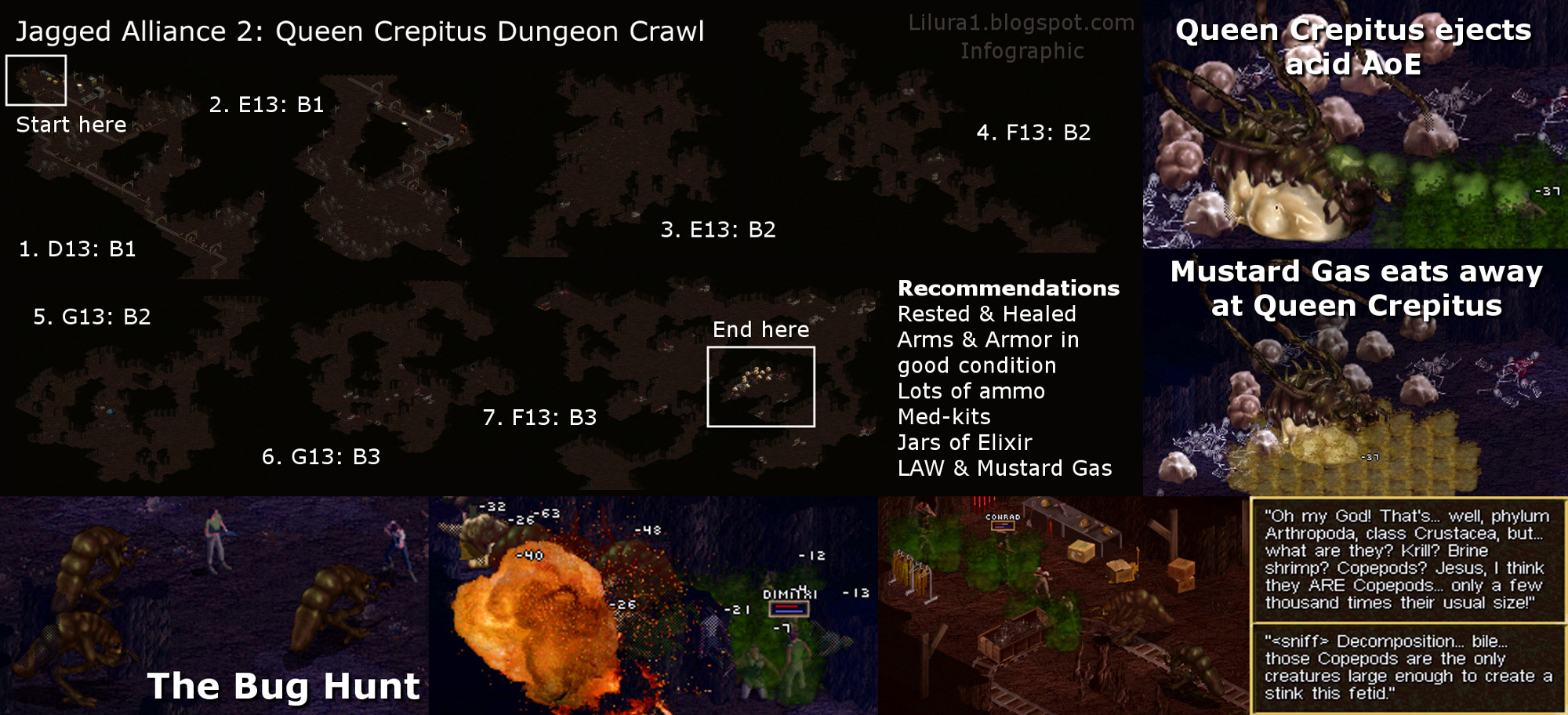
Sir-Tech's Jagged Alliance 2 wins best game of 1999 by a country mile. Jagged Alliance 2 also wins best TBT game, best 2D graphics, best sound effects and best user interface. Indeed, Jagged Alliance 2 is one of the best games ever made. Fallout won best game of 1997 and Baldur's Gate won best game of 1998. Well, Jagged Alliance 2 wipes the floor with both of them.
- Best TBS game of 1999: Sid Meier's Alpha Centauri
- Best FPS of 1999: Quake III
- Best aRPG of 1999: System Shock 2
- Best Adventure Game of 1999: Gabriel Knight 3
- Best Action-adventure game of 1999: Grand Theft Auto 2
- Best Flight Sim of 1999: FreeSpace 2
- Best Armor Sim of 1999: MechWarrior 3
- Best RTS game of 1999: Age of Empires II
- Best wargame of 1999: Operational Art of War II
- Best MMORPG of 1999: EverQuest
- Best 2D shooter of 1999: T-Zer0 (Amiga)
- Best Racing sim of 1999: Sports Car GT
- Best Sports sim of 1999: LINKS LS 2000
- Best writing of 1999: Planescape: Torment
- Best 3D game of 1999: MechWarrior 3
And so concludes the Decade of the 1990s (1990-1999): the greatest decade in PC-gaming history.
PC Game of the Decade, aka GoD [§5.0]

- Game of the Decade: Frontier: Elite 2 of 1993 by Braben/Sawyer (M68K/x86, U.K.)
- Genre of the Decade: FPS, TBS & RTS
The genre are listed in alphabetical order:
- Adventure game of the Decade: Monkey Island of 1990 by LucasArts (DOS, U.S.)
- Armor Sim of the Decade: MechWarrior 2 of 1995 by Activision (DOS, U.S.)
- aRPG of the Decade: System Shock 2 of 1999 by IG/LGS (Win, U.S.)
- Block-breaker of the Decade: Tecnoball of 1991 by TLK (Amiga, FRA)
- City-builder (or misc.-builder) of the Decade: Railroad Tycoon of 1990 by MPS Labs (DOS, U.S.)
- Coinop conversions of the Decade: Street Fighter 2 of 1992 & Mortal Kombat of 1993 (DOS)
- cRPG of the Decade: Fallout of 1997 by Interplay (DOS/Win, U.S.)
- Dungeon-crawler of the Decade (1st-person): Captive of 1990 by Crowther (Amiga, U.K.)
- Flight Sim of the Decade: Falcon 3.0 of 1991 by Sphere Inc. (DOS, U.S.)
- FPS of the Decade: Quake of 1996 by id Software (DOS, U.S.)
- God game of the Decade: Dungeon Keeper of 1997 by Bullfrog (DOS/Win, U.K)
- Open-world game of the Decade: Midwinter of 1990 by Maelstrom (Amiga/DOS, U.K.)
- Platformer of the Decade (2D): Flashback of 1992 by Delphine (Amiga, FRA)
- Platformer of the Decade (3D): Tomb Raider of 1996 by Core Design (DOS, U.K.)
- Puzzle game of the Decade: Lemmings of 1991 by DMA Design (Amiga, U.K.)
- Rogue-like of the Decade: Diablo of 1996 by Blizzard (Win, U.S.)
- RTS game of the Decade: Command & Conquer of 1995 by Westwood (DOS, U.S.)
- RTT game of the Decade: Syndicate of 1993 by Bullfrog (DOS, U.K.)
- Racing sim of the Decade: Formula One Grand Prix of 1991 by Crammond (Amiga, U.K.)
- Racing game of the Decade (2D/arcade): Lotus of 1990 by Magnetic Fields (Amiga, U.K.)
- Run n gun game of the Decade: Turrican of 1990 by Rainbow Arts (C64/Amiga, GER)
- SHMUP of the Decade (2D): Uridium of 1993 by Graftgold (Amiga, U.K.)
- SHMUP of the Decade (3D): X-Wing of 1993 by Totally Games (DOS, U.S.)
- Sports sim of the Decade (solo-sports): LINKS of 1990 by Access (DOS, U.S.)
- Sports sim of the Decade (team-sports): Kick Off 2 of 1990 by Anco (Amiga, U.K.)
- Survival-horror game of the Decade: Alone in the Dark of 1992 by Infogrames (DOS, FRA)
- Tactical Shooter of the Decade: Rainbow Six of 1998 by Red Storm (Win, U.S.)
- TBS 4X game of the Decade: Civilization of 1991 by MPS Labs (DOS, U.S.)
- TBS/TBT game of the Decade: X-COM of 1994 by Mythos (DOS, U.K.)
- TBT game of the Decade: Jagged Alliance 2 of 1999 by Sir-Tech (Win, CAN)
- Versus Fighter of the Decade: Street Fighter 2 of 1992 by Creative Materials (DOS, U.S.)
- Wargame of the Decade: Steel Panthers of 1995 by SSI (DOS, U.S.)
Thus, the Windows era only hosted the best game of the decade for six out of 32 genre. The reasons for that have been supplied by PC Games of 1995. As a rule, the Windows-era scaled game-types of DOS origin in increments for five years (1995-1999); also, making a few big strides forward while building up many super-franchises. By and large, the Windows half of the 90s was an agrarian scaling era whereas the DOS half of the 90s can barely be pigeon-holed: foundational and yet also the Wild West.
The DOS era found the land, broke the ground, tilled the soil, sowed the seeds and grew the crops whereas the Windows era scaled the farmland by an order of magnitude yet decided that some crops were not worth growing anymore.
In terms of historical significance DOS games of the 90s absolutely wiped the floor with Windows games of the 90s, even though both platforms enjoyed fives years of dominance apiece in the 90s. Largely ignored by history the Amiga of 1985 also had a super-strong early-90s showing; one that Windows did not match let alone expand upon as regards certain game-types; literal god-genre all but ignored. Even the C64 of 1982 surfaces in the above enumeration because Windows has no analogue of comparable impact for the genre in question.
Windows did not have strong multi-genre representation in the 90s because several genre were falsely deemed to be old-hat; a monumental mistake by the faddist, pig-headed, 3D-obsessed and PlayStation-mimicking Windows game industry of the late 90s; one that took two decades of super-scaled Steam slop-spam to "address".
The half-truth told by history is that PCs had their genre (kb/m) and consoles had their genre (gamepads); that PCs could not drive 2D arcade-action games and consoles could not drive TBS, RTS and flight sims. But the full truth is that PC hardware could handle any and all genre at full-speed from 1991 onwards whereas console hardware was always stunted in genre-range due to hardware and control-scheme limitations. If the PC did not have Game X, that was a market choice. But if consoles did not have Game X it was often because they could not drive Game X. That is the full truth.
In conclusion, here are two big-name 2D arcade-action games of the early 90s whose PC versions were better than the console versions: