This article is divided into the following sections:
[§1.0] Hardware & Software Technologies of 1997
[§2.0] Windows 95: Victory Laps
[§3.0] Genre Overview of 1997
[§3.1] RTS Games
[§3.2] Wargames & TBS Games
[§3.3] FPS Games
[§3.4] Adventure Games
[§3.5] cRPGs
[§3.6] Sports PC Games
[§3.7] Racing Games
[§3.8] Flight & Armor Sims
[§3.9] Arcade Games
[§4.0] The Three Fads
[§5.0] Current Coverage
[§6.0] Best 1997 PC Games: Awards
PC Games & Hardware of 1997
This is an overview of PC games and hardware that came out in 1997.
Hardware & Software Technologies of 1997

A good gaming PC of early 1997 consisted of an Intel Pentium Pro 200 MHz CPU, 64 megs of EDO DRAM, 2x 4.55 gig 10,000-RPM SCSI hard disk drive (RAID) and 12x SCSI CD-ROM drive coupled with 2D acceleration via Matrox Millennium card (May of 1995), 3D acceleration via 3Dfx Orchid Righteous 3D card (Oct. of 1996) or Diamond Monster 3D card (Nov. of 1996), and audio acceleration via Creative Labs Sound Blaster 16 PnP card of 1995. However, MIDI aficionada also preferred to have the Yamaha SW60XG Waveforce of 1996 at their disposal as well.
High-end gaming PCs of late 1997 (800-MIP Pentium II 300 MHz and 2x video cards) could run Quake 2 at 70 FPS in 640x480, which was impressive in 1997.
Chronological listing by release month (the U.S. month of release is appended to each entry):
- 3Dfx Interactive released 3Dfx GL / MiniGL in Jan. (pseudo-OpenGL driver)
- Intel released Intel Pentium MMX in Jan.
- ATI Technologies released 3D Rage Pro PCI in Mar.
- Diamond Multimedia Systems released Stealth 3D 2000 Pro in Mar. (S3 ViRGE/DX)
- DVD-ROM released in the U.S.A. in Mar.
- Nvidia released RIVA 128 PCI aka NV3 in Apr.
- AMD released AMD K6 CPU (166-233 MHz) in Apr.
- Intel released Pentium II CPU (233-300 MHz) in May
- 3Dlabs released PERMEDIA 2 PCI/AGP in May
- Microsoft released Windows NT 4.0 SP3 in May (AGP support)
- Canopus Corporation released Canopus Total 3D in Jun. (Vérité V1000)
- Ensoniq released AudioPCI sound card in Jul. (SID lineage)
- STB Systems released Velocity 128 in Jul. (RIVA 128)
- Diamond Multimedia Systems released Viper V330 PCI in Aug. (RIVA 128)
- 3Dfx Interactive released Voodoo Rush PCI in Aug.
- Matrox released Mystique 220 PCI in Aug. (MGA-1164SG)
- Microsoft released DirectX 5.0 in Aug.
- Microsoft released Windows 95 OSR2.1 in Aug. (AGP & USB support)
- Intel released Accelerated Graphics Port (AGP) in Aug.
- Intergraph Corporation released Intense 3D Voodoo PCI in Sept. (Voodoo Rush)
- Rendition released Vérité V2100 PCI in Sept.
- Microsoft released Internet Explorer 4.0 & Windows Desktop Upgrade in Sept. [1]
- Diamond Multimedia Systems released Stealth II S220 PCI in Sept. (Vérité V2100)
- ELSA Technology released Victory Erazer in Oct. (RIVA 128)
- Canopus released Total 3D V128 in Oct. (RIVA 128)
- Rendition released Vérité V2200 PCI/AGP in Nov.
- S3 Graphics released S3 ViRGE/GX2 PCI/AGP in Nov. (S3d)
- Hercules released Hercules Thriller 3D PCI/AGP in Nov. (Vérité V2100)
- Microsoft released Windows 95 OSR2.5 in Nov. (IE4.0)
- Quantum3D released Obsidian 100SB in Nov. (2x Voodoo SLI)
- Jazz Multimedia released Adrenaline Rush 3D in Dec. (Voodoo Rush)
- Joystick: Microsoft SideWinder Precision Pro (Aug.)
- Joystick: ThrustMaster Millennium 3D Interceptor, ThrustMaster Top Gun
- Force-feedback joystick: CH Products Force FX, Microsoft SideWinder Force Feedback Pro
- Gamepad: 6-button ThustMaster Rage 3D 100
- Intel's Indeo Video & Apple's QuickTime were needed to play FMVs in some games
The average 3D PC game of 1997 required at least 4 megs of onboard vRAM. Most of the above-listed 3D video cards have 4 or 8 megs of SGRAM. By the end of 1997 you basically wanted 8 megs of vRAM.
Origin Systems' Wing Commander: Prophecy of Nov. explicitly supported five Direct3D video cards and five 3Dfx video cards whereas id Software's Quake 2 of Dec. supported 3Dfx OpenGL and PowerVR OpenGL as well as Rendition, Intergraph and ATI Rage Pro under Default OpenGL. Quake 2 did not support Nvidia RIVA 128 under Default OpenGL until Jan. of 1998.
While not so famous for much of 1997 Nvidia's RIVA 128 of Apr. (listed above) would evolve into the RIVA 128ZX of Feb. of 1998 and the RIVA TNT2 and TNT2 Ultra of Mar. of 1999, followed by the GeForce 256 of Oct. 1999.
Nvidia's RIVA 128 was a contender to 3Dfx Voodoo dominance, and is thus historically significant.
Windows 95: Victory Laps
The most popular operating system of 1997 was Windows 95 with DirectX 3.0-5.0, but Windows NT 4.0 support picked up in 1997 via (to cite a few big-name games) Win/GLQuake, Quake 2 and Age of Empires compatibility with NT 4.0. Of course, NT would eventually dominate via Windows XP of 2001 (and rightly so).
MS-DOS 6.22 of 1994 was still widely used by PC gamers in 1997. Indeed, many PC gamers were still playing base-game Doom/II and Quake in DOS, to say nothing of the DOS releases of Final Doom of Jun. of 1996 (TNT:Evilution & Plutonia Experiment) and Quake's Dissolution of Eternity & Scourge of Armagon of Feb. and Mar. of 1997. And while such could be played from Windows 95 as well, MS-DOS enjoyed less in the way of overhead.
However, if Microsoft-published games, Doom95, the first DirectX 2.0/3.0 games (e.g., Diablo) and Sega-developed PC games of 1996 had not yet clarified that Windows would be the gamer's OS for the foreseeable future, 1997 made it crystal clear that that was indeed the case. And history shows us that foreseeable future pretty much became forevermore. It was the rapidly advancing hardware technologies (by the likes of Intel, Seagate and 3D chipset manufacturers), the well-documented DirectX API, and the comparative user-friendliness of Windows 95 (e.g., GUI, autoplay, plug and play) that all but ensured its success as a gaming platform. Microsoft's success in converting gamers from DOS and the lame DOS-dependent operating "environments" (3.x) cannot be overstated.
The above-mentioned overhead that stems from Windows 95 being GUI-based (DOS is CLI-based) was somewhat offset by the power of 1997 hardware (e.g., CPU speed, RAM-size, HDD speed), which was rapidly advancing.
Since there were no contenders to Win-tel dominance 1997 is not as interesting to commentate on as previous years (and the same goes for all subsequent years), but that does not mean that 1997 was not a great year for PC gamers: big-name franchises of DOS-origin (or which were notable on DOS) made their official transition to Windows 95, such as:
- Westwood Studio's Command & Conquer via CnC Gold
- LucasArts' Dark Forces via Jedi Knight
- Dynamix's Front Page Sports: Football and Baseball via Pro '98
- Raven Software's Hexen via Hexen II
- Access Software's LINKS via LINKS LS 1998
- Midway's Mortal Kombat via MK4
- SSI's Panzer General via PG2
- Dynamix's Red Baron via Red Baron II
- Capcom's Street Fighter via SF0
- id Software's Quake via Quake 2
- Totally Games' X-Wing & TIE Fighter via X-Wing vs. TIE Fighter
- SSG's Warlords via Warlords III
- Origin Systems' Wing Commander via Wing Commander: Prophecy
However, one could make an argument to the effect that, of the above-listed, no successor on Windows 95 was superior to the DOS original or predecessor; indeed, several were not as good! And it's a given that no successor is as historically significant as the DOS original. For the most part, as subsequent years roll on, we find ourselves dealing more and more with devolutions, stagnations or incremental advances (at best), rather than revolutions. The reasons for this have been given in 1995; that is, "normie involvement in game development and the diminishing returns of subsequent technological advances" and (to paraphase) "the DOS era not only originated most genre but also brought them to their height". From 1995 onwards the Windows PC was just doing victory laps after a race that DOS, VGA and the 486DX had already won by a country mile, back in 1994: proof.

Having jumped on the Windows 95 bandwagon in 1996 Sega doubled-down in 1997 by releasing Windows 95 ports of Sega AM1's Virtua Fighter 2, SegaAM2's Virtua Cop 2, Sega AM2's Daytona USA (Deluxe) and Sega AM3's Sega Rally. In addition Capcom released Windows 95 ports of Resident Evil and Street Fighter Alpha and Alpha 2 (Zero and Zero 2). None of the above were released for DOS.
EA's Need for Speed II and NFS:SE were also released for Windows 95 in 1997, not DOS. cf. Need for Speed.
That said, many PC games of 1997 were distributed on CD-ROM that contained both DOS and Windows installers (install.exe and setup.exe); otherwise, they received both DOS and Windows 95 releases. For example, the greatest pure cRPG of all-time was released for both DOS and Windows 95; that is, Interplay's legendary Fallout. In addition, DMA Design's Grand Theft Auto was released for both DOS and Windows 95.
PC Game Genre Overview of 1997 [§3.0]
In 1997 the PC-game catalogue was more focused on scaling, pseudo-individualizing, and pushing 3D chipsets than it was with innovation or even masterful refinement of the tried and true. That doesn't mean no PC game of 1997 innovated or refined; this is just a general introductory remark.
RTS PC Games 1997 [§3.1]
Note the huge RTS-genre expansion of 1997:

- Feb.: Command & Conquer: Gold by Westwood Studios (Win)
- Mar.: Enemy Nations by Windward Studios (Win), KKnD by Beam Software (Win), Theme Hospital by Bullfrog Productions (DOS/Win)
- Apr.: Red Alert: Counterstrike by Westwood Studios (DOS)
- Jun.: Dungeon Keeper by Bullfrog Productions (DOS/Win)
- Aug.: Outpost 2 by Dynamix (Win), Dark Colony by Alternative Reality (Win)
- Sept.: Close Combat II by Atomic Games (Win), Total Annihilation by Cavedog Entertainment (Win), Dark Reign by Auran Development (Win), 7th Legion by Vision Software / Epic MegaGames (Win), War Inc. by Optik Software (DOS), Red Alert: Aftermath by Westwood Studios (DOS)
- Oct.: KKnD Xtreme by Beam Software (Win), Age of Empires by Ensemble Studios (Win), Chaos Island: Lost World by DreamWorks Interactive (Win), Earth 2140 by Reality Pump (DOS/Win)
- Nov.: Myth: Fallen Lords by Bungie (RTT) (Win), NetStorm: Islands at War by Titanic Entertainment (Win), Pax Imperia: Eminent Domain by Heliotrope Studios (Win), Seven Kingdoms by Enlight Software (Win), War Wind II by Dreamforge Intertainment (Win)
(RTT = Real-time Tactics)
That's no fewer than six RTS releases in Sept., four in Oct. and five in Nov. And several 1997 RTS games are king-tier; even the most ardent RTS disciple would not have been aware of all of them in 1997, let alone played all of them.
Just around the corner was Blizzard's StarCraft of Mar. of 1998, too. RTS was so popular that it was influencing the design of TBS games and threatening to convert TBS franchises to RTS ones: publisher requests that TBS designer converts their long-running TBS franchise to RTS twitch-fest in order to cash-in on the RTS fad; many a designer answers with a flat "No."
Several of the above RTS games were directly influenced by Westwood's Dune 2 of 1992 and Command & Conquer of 1995; and not just in the general "it's RTS" sense.
Of the above, the Microsoft-backed Age of Empires would emerge victorious and eventually dominate the RTS genre, even into the 2020s.
One would do well to remember that the origin of Bullfrog's Dungeon Keeper and Theme Hospital is Bullfrog's Populous of 1989 (Theme Hospital via Theme Park of 1994).
Wargames & TBS Games of 1997 [§3.2]

On the wargame front, in 1997 TalonSoft released the 6th, 7th and 8th entries in their Battleground series, Strategic Simulations Inc. released their 3rd Steel Panthers entry as well as the 5th and 6th entries in their Panzer General series, and Erudite Software released the first two entries in their Great Battle series. In addition, Impressions Games released the sequel to Civil War General and Strategic Studies Group released the first entry in their Decisive Battles of WWII trilogy.
- Mar.: Magic: The Gathering by MicroProse (Win)
- May: Battleground 6: Napoleon in Russia & Battleground 7: Bull Run by TalonSoft (Win)
- Jun.: Decisive Battles of WWII: Ardennes Offensive by SSG (Win), Great Battles of Alexander by TalonSoft (Win)
- Jul.: Birthright: Gorgon's Alliance by Synergistic Software (Win), Pacific General by SSI, X-COM Apocalypse by Mythos Games (DOS/Win) (TBT, RTT, TBS)
- Aug.: Warlords III Reign of Heroes by SSG (Win)
- Sept.: Battleground 8: Prelude to Waterloo by TalonSoft (Win), Achtung Spitfire! by Big Time Software (Win), Imperialism by Frog City Software (Win)
- Oct.: Chessmaster 5500 by Mindscape (Win), Civil War Generals 2 by Impressions Games (Win), East Front by TalonSoft (Win), Panzer General II by SSI (Win), Sid Meier's Gettysburg! by Firaxis Games (Win), Incubation: Time is Running Out by Blue Byte (TBT) (Win)
- Nov.: Civilization II: Fantastic Worlds by MicroProse (Win), Great Battles of Hannibal by Erudite Software (Win), Steel Panthers 3 by SSI (Win), Svea Rike by Target Games (Win)
- Dec.: Lords of Magic by Impressions Games (Win)
(TBT = Turn-based Tactics.)
An impressive line-up, indeed; several of those wargames are king-tier. X-COM: Apocalypse is one of the most ambitious PC games ever made.
Compilation-wise, SSI released World of Sword & Steel (eight games) and Five Star Collection (four games) in 1997 for PC DOS.
FPS Games of 1997 [§3.3]

- Feb.: Quake: Scourge of Armagon by Hipnotic Interactive (DOS)
- Mar.: Quake: Dissolution of Eternity by Rogue Entertainment (DOS), Blood by Monolith Productions (DOS)
- Apr.: Outlaws by LucasArts (Win 95), Redneck Rampage by Xatrix Entertainment (DOS)
- May: Shadow Warrior by 3D Realms Entertainment (DOS)
- Jul.: Last Rites by Ocean Software (DOS)
- Aug.: Terracide by Simis (Win)
- Sept.: Hexen II by Raven Software (Win 95)
- Oct.: Star Wars: Jedi Knight - Dark Forces II by LucasArts (Win 95)
- Nov.: Duke Nukem 3D Kill-A-Ton Collection (DOS/Win), Turok: Dinosaur Hunter by Sculptured Software (Win 95)
- Dec.: Gloom 3: Zombie Edition by Alpha Software (Amiga), Quake 2 by id Software (Win 95 / NT 4.0)
The picks of that pack are the Quake games and LucasArts' Outlaws and Jedi Knight; they are great games. LucasFilm/Arts had been one of the best multi-genre developers on the planet since the early 80s.
While they would not be graced with a Quake port until 1998 FPS Amigans of 1997 nonetheless had access to Alpha Software's Gloom 3: Zombie Edition, aka Ultimate Gloom. And several other FPS games besides. cf. Texture-mapping for a rundown.
Adventure Games of 1997 [§3.4]

- Mar.: Atlantis: Lost Tales by Cryo Interactive (Win), Last Express by Smoking Car Productions (DOS), Star Wars Yoda Stories by LucasArts (Win)
- Apr.: Callahan's Crosstime Saloon by Legend Entertainment (DOS), City of Lost Children by Psygnosis (DOS), Last Express by Smoking Car Productions (Win), Shivers II: Harvest of Souls by Sierra On-Line (Win)
- Jul.: Twinsen's Odyssey aka Little Big Adventure 2 by Adeline Software International (DOS/Win)
- Aug.: Zork: Undiscovered Underground by Activision (Win)
- Sept.: Amazon Trail 3rd Edition: Rainforest Adventures by MECC (Win), Monty Python's The Meaning of Life by 7th Level (Win)
- Oct.: Broken Sword II: Smoking Mirror by Revolution Software (Win), Dark Earth by Kalisto Entertainment (Win), Myst II: Riven by Cyan (Win), Zork Grand Inquisitor by Activision (Win)
- Nov.: Blade Runner by Westwood Studios (Win), Curse of Monkey Island by LucasArts (Win), Oregon Trail 3rd Edition: Pioneer Adventures by MECC (Win)
Curse of Monkey Island was the third Monkey Island game released by LucasFilm/Arts (and their 11th adventure game in this, their most famous style), but it is no better than the original of 1990. I say that a lot on this blog: that a sequel is no better than the original; it's my shtick -- and it's also true.
It is also worth noting that Legend Entertainment had released no fewer than one dozen interactive fiction or graphics adventure games by 1997 (1990-97). In addition, they had released the Lost Adventures of Legend eight-game compilation for DOS/Win in 1996, which installs the eight games into separate folders in one fell swoop.
cRPGs of 1997 [§3.5]

- Apr.: Exile III: Ruined World by Spiderweb Software (Win), Heroes of Might & Magic II: Price of Loyalty by Cyberlore Studios (DOS/Win)
- Jun.: Betrayal in Antara by Dynamix (Win)
- Aug.: Faery Tale Adventure II Halls of the Dead by The Dreamer's Guild (DOS/Win)
- Sept.: Lands of Lore II: Guardians of Destiny by Westwood Studios (DOS/Win), Ultima Online by Origin Systems (Win)
- Oct.: Fallout by Interplay (DOS/Win)
- Nov.: Diablo: Hellfire by Synergistic Software (Win), Elder Scrolls Legend: Battlespire by Bethesda Softworks (DOS)
- Dec.: Yendorian Tales: Tyrants of Thaine by Smithware Games (DOS/Win)
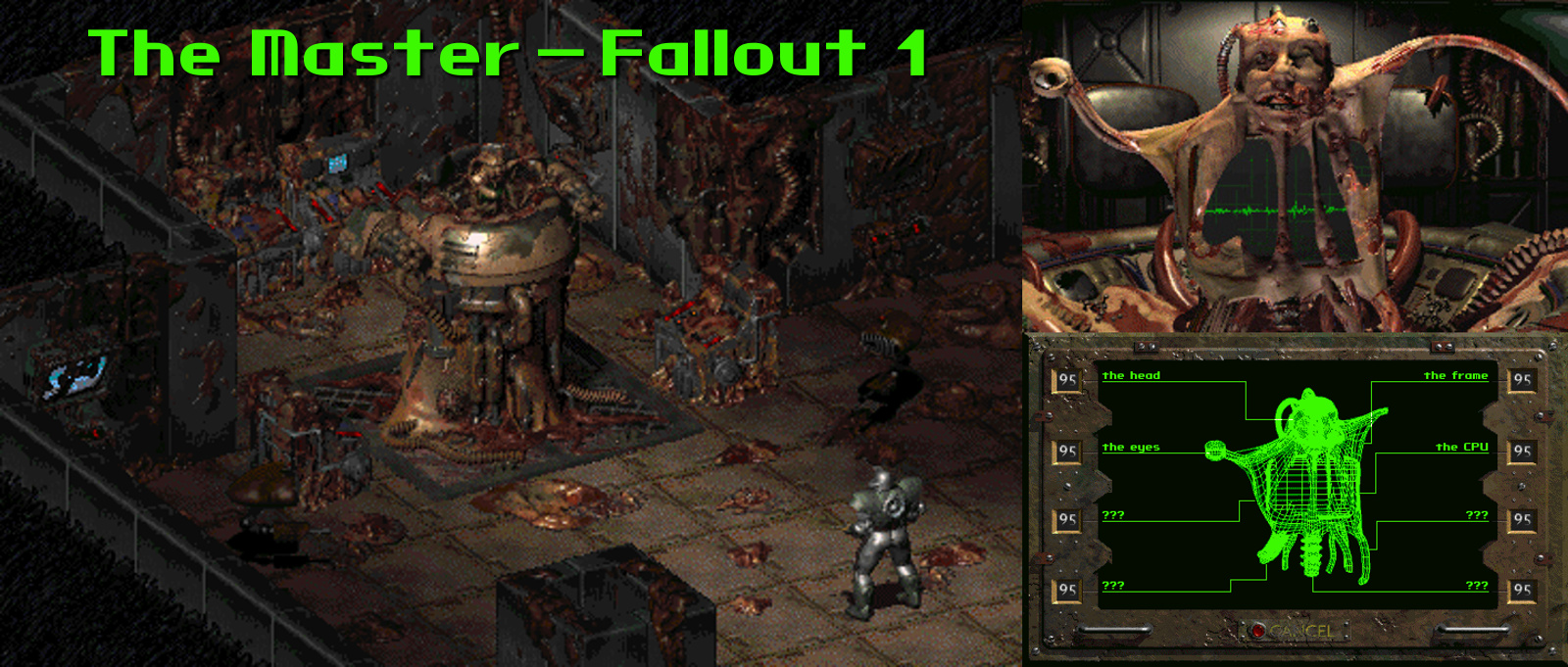
As I said in Best cRPGs, Interplay's Fallout was like the best cRPG or adventure game you had ever played, multiplied by 100. Fallout wins several awards in this article [§6.0].
Origin Systems' Ultima Online MMORPG is also historically significant: it gained 100K players in its first six months of operation and spawned five Origin-developed expansions by 2003, at which point it had amassed a player-base of 250K. However, it wasn't until EverQuest of 1999 that MMORPGs would become truly mainstream.
Sports PC Games of 1997 [§3.6]
Team-sports and solo-sports PC games were strong in 1997, but this has generally been true throughout PC-game history. The main difference here is that many sports franchises were transitioning from DOS to Windows 95.
Note that motorsport games are covered in the next section.

- Jan.: Cricket 97 aka Battle for the Ashes 97 by Beam Software (DOS)
- Feb.: NBA Jam Extreme by Sculptured Software (Win)
- Mar.: Jack Nicklaus 4 by Cinematronics (Win)
- Apr.: British Open Championship Golf by LookingGlass Technologies (Win)
- May: 3D Ultra MiniGolf by Dynamix (Win), Front Page Sports Baseball Pro '98 by Dynamix (Win), Front Page Sports Golf by Headgate Studios (Win)
- Jun.: Kick Off 97 by Anco Software (DOS/Win), LINKS LS 1998 by Access Software, PGA Tour Pro by EA Sports (Win), Premier Manager 97 by Gremlin Interactive (Win), Tony La Russa Baseball 4 by Stormfront Studios (Win), Triple Play 98 by EA Sports (Win)
- Jul.: VR Baseball by VR Sports (Win)
- Sept.: NHL 98 by EA Canada (Win)
- Oct.: Madden NFL 98 by Stormfront Studios (Win), NBA Live 98 by EA Canada (Win), NCAA Football 98 by EA Tiburon (Win)
- Nov.: FIFA: Road to World Cup 98 by EA Canada (Win), Front Page Sports Football Pro '98 by Synergistic Software (Win), Front Page Sports Ski Racing by Dynamix (Win), Jack Nicklaus 5 by Eclipse Entertainment (Win), Premier Manager 98 by Dinamic Multimedia (Win)
- Dec.: Kick Off 98 by Anco Software (DOS/Win), Pete Sampras Tennis '97 by Codemasters (DOS/Win), Sensible Soccer '98 by Sensible Software (Win)
Golf-sim fans were happy in 1997 thanks to the releases of LINKS golf (franchise origin in 1990; actual origin in Leader Board of 1986), PGA Tour golf (origin in 1990), Jack Nicklaus Golf (origin in 1988) and British Open Championship Golf (origin in Mean 18 of 1986). Noble lines, to be sure.
Note that PGA Tour Golf Pro of 1997 would lead to no fewer than 14 Tiger Woods PGA Tour Golf games, developed by four different studios over a 13-year period.
1997 is the year in which EA Sports and its divisions successfully transitioned the FIFA, NBA Live, NHL, Madden NFL and Triple Play franchises from DOS to Windows 95. For example, after the above entries of 1997 EA Canada would develop 28 more FIFA games in succession, eight more NBA Live games in succession and five more NHL games in succession whereas Stormfront would develop one more Madden NFL game (99) before EA Tiburon took over and developed 15 more in succession. (By succession is meant in unbroken sequence, year after year.)
On the other hand, EA Sports' Triple Play Baseball franchise fizzled out by 2001 after six successive PC releases by four different developers from 1996-2001; after which, it was succeeded by EA Canada's MVP Baseball of 2003.
Sensible Software transitioned their 2D Sensible Soccer franchise to 3D in 1997 via Sensible Soccer '98. As a result, Sensible Soccer '98 would have a completely different look and feel to the 1992-96 Sensible Soccer games that were famous on Amiga and DOS. Possible reasons for converting Sensible Soccer to 3D:
- The success of 3D Actua Soccer of 1995 and 3D FIFA Soccer 97 of 1996
- 3D games were in full-swing in 1997
- The game was to be ported to the PlayStation (a 3D-focused console)
Note also how Anco's Kick Off franchise (which kicked off in 1989 on the Atari ST) added two more entries in 1997. However, I'd say that Kick Off 2 of 1990 retained its crown.
Racing Games of 1997 [§3.7]

- Feb.: Sega Rally Championship by Sega AM3 / Sega PC (U.S.A.) (Win)
- Mar.: Interstate '76 by Activision (DOS/Win), POD: Planet of Death by Ubi Soft (Win), Thunder Truck Rally aka Monster Trucks by Reflections Interactive (Win), Test Drive Off-Road by Elite Systems (DOS/Win)
- Apr.: Need for Speed II by EA Seattle (Win)
- May: Street Racer by Vivid Image (DOS/Win)
- Jun.: Carmageddon by Stainless Games (DOS), Formula 1 by Bizarre Creations (Win), Screamer Rally by Milestone (DOS/Win)
- Jul.: WipEout 2097 (WipEout XL) by Psygnosis
- Aug.: Carmageddon by Stainless Games (Win), Moto Racer by Delphine Software (Win), XCar: Experimental Racing by MediaTech West (DOS)
- Sept.: International Rally Championship by Magnetic Fields (Win)
- Oct.: SODA Off-Road Racing by Software Allies (Win), Need for Speed II Special Edition by EA Seattle (Win), Daytona USA Deluxe Special Edition by Sega AM2 (Win)
- Nov.: Andretti Racing by High Score Productions / Stormfront Studios (Win), CART Racing by Papyrus Design Group (DOS/Win), NASCAR Grand National Series by Papyrus Design Group (DOS/Win), Test Drive 4 by Pitbull Syndicate (Win), TOCA Championship Racing by Codemasters (Win)
Note that International Rally Championship is of noble Lotus lineage. With a few exceptions the above-listed racers can be categorized as actual racing sims, though some are more action-based than others.
Geoff Crammond had been a leader in racing-sim design since 1985's Revs, but would not release another F1GP game until the year 2000. The other leader, Papyrus, would continue to develop racing sims up to 2003. Anyway, most racing sim fans of 1997 were still playing Crammond's Grand Prix 2 and Papyrus' NASCAR Racing 2 of 1996 (the above-listed NASCAR GNS being an expansion to NR2).
Flight & Armor Sims of 1997 [§3.8]

- Feb.: Air Warrior II by Kesmai (Win)
- May.: Comanche 3 by NovaLogic (DOS)
- Jun.: Jane's 688(I) HunterKiller by Sonalysts Inc. (Win)
- Sept.: Microsoft Flight Simulator 98 by Microsoft (Win), Star Trek: Starfleet Academy by High Voltage Software (Win)
- Oct.: Armored Fist 2 by NovaLogic (DOS), Sabre Ace: Conflict Over Korea by Eagle Interactive (Win)
- Nov.: Agile Warrior: F-111X by Black Ops Entertainment (Win), Flight Unlimited II by Looking Glass Studios (Win), G-Police by Psygnosis (Win), Heavy Gear by Activision, Jane's Longbow 2 by Origin Systems (Win), Wing Commander: Prophecy by Origin Systems (Win)
- Dec.: Air Warrior III by Kesmai (Win), Joint Strike Fighter by Innerloop Studios (Win), Red Baron II by Dynamix (Win), Sierra Pro Pilot by Dynamix (Win)
The picks of that pack are Red Baron II, Jane's Longbow 2 and Flight Unlimited II; all three are sequels to the DOS originals. Also, they did not devolve from the originals.
Arcade Games of 1997 [§3.9]

By arcade games, I am referring to traditional arcade-action games aka coinop-style games (such as shooters, platformers and versus fighters) as well as to general action-adventure games. Racing games and FPS games are covered above, in their own sections.
- Jan.: Die Hard Trilogy by Probe Entertainment (Win), Iron & Blood: Warriors of Ravenloft by Take-Two (DOS/Win)
- Feb.: Adventures of Tintin: Prisoners of the Sun by East Point Software (DOS), Gradius Deluxe Pack by Konami (Win)
- Mar.: Buccaneer by Divide by Zero Software (Win), MDK by Shiny Entertainment (DOS/Win), Sonic & Knuckles Collection by Sonic Team (Win)
- Apr.: Lost Vikings 2 by Beam Software (DOS/Win), Worms: Director's Cut by Team 17 (Amiga)
- May: X-Men Children of the Atom by Capcom (DOS)
- Jun.: Raiden II by Kinesoft (Win), Mortal Kombat 4 by Eurocom (Win), Street Fighter Zero by Capcom (Win)
- Jul.: Atomic Bomberman by Interplay (Win), Machine Hunter by Eurocom (Win)
- Aug.: Nebula Fighter by Holodream Software (DOS)
- Sept.: Blood Omen: Legacy of Kain by Silicon Knights (Win), Croc: Legend of the Gobbos by Argonaut Software (Win), Resident Evil by Capcom (U.S.A.) (Win), Postal by Running With Scissors (Win 95/NT 4.0), Virtua Fighter 2 by Sega AM1 1997 (Win), Lego Island by Mindscape (Win)
- Oct.: Disney's Hercules by Eurocom (Win)
- Nov.: Grand Theft Auto by DMA Design (DOS/Win), Men in Black: The Game by Gigawatt Studios (Win), Oddworld: Abe's Oddysee by Digital Dialect (DOS/Win), Street Fighter Zero 2 by Capcom (Win), Tiger's Bane by Longbow Digital Arts (Amiga), Tomb Raider II by Core Design (Win), Virtua Cop 2 by Sega AM2 (Win), Worms 2 by Team 17 (Win)
- Dec.: Nightmare Creatures by Kalisto Entertainment (Win), Re-loaded by Gremlin Interactive (DOS), Star Wars: Shadows of the Empire by LucasArts (Win)
Disney's Hercules was the fourth 2D Disney platformer to be released on PC; while not as good as Aladdin of 1994, it was technically superior to the three others.
It was good to see the PC still getting Mortal Kombat and Street Fighter games as well but, overall, this genre's 1997 line-up was a disappointment.
Note that PC ports of Mortal Kombat and Street Fighter were superior to the console ports (this is true going back to SF2 and MK1, too). In addition, PC Resident Evil was superior to the PlayStation original. Indeed, any PlayStation game could have been superior on PC; it is just that many were not ported to PC.
In 1997 Team 17 released Worms 2 for Windows 95 whereas Amiga AGA got Worms: Director's Cut, which was the last game Team 17 would release for the Amiga. cf. Worms. I mention this because Team 17 were one of the most loyal big-name Amiga developers; they held out for longer than most.
The Three Fads [§4.0]
In 1997 three fads were in full-swing: the 3D texture-mapping fad, the multiplayer fad and the RTS fad. I call them fads because that's what they were in 1997; respectively, they came at the expense of 2D games, solitaire games and genre-variety. For example, X-Wing vs TIE Fighter of Apr. was MP-only until Nov.: big mistake.
The above can be summed up by normies with "No 3D no buy, No MP no buy, No RT no buy". Such was the normie mindset in 1997.
That said, the RTS fad was not wholly a bad thing because RTS is a PC-focused genre due to its mouse control (e.g., marquee selection) and extensive hotkey usage. Moreover, most RTS games actually featured good gameplay. On top of that, the RTS fad somewhat offset the 3D fad in that 3D chipsets did not yet have the capacity to render massively multi-unit games in realtime 3D, but the 3D plague would eventually infect RTS and most other genre as the years wore on (e.g., WarCraft III); and even devolve several genre; in all-too-many cases, it was just 3D for 3D's sake.
Not to put too finer point on it but in all-too-many cases it wasn't that 3D would facilitate a better game X -- that wasn't the reason game X was 3D -- it was that game X should be 3D in order to push around a pack of polygons on the latest 3D card -- that was the real reason. Because 3D was a fad. And thus, 3D games sell better than 2D games: a market-manufactured mindset.
It was a shame that the PC was a 3D-centric platform that, as of 1997, had barely even begun to be pushed in the sphere of 2D-acceleration; like the Sony PlayStation it had comparatively no 2D arcade-action pedigree (unlike the Amiga, SNES and Genesis). Going back as far as the early 90s the PC had shown that it did indeed have the capacity for 2D arcade-action games -- even platform games -- but that capacity was being largely ignored in favor of poly-slop. And this was partly due to the undeserved popularity of the pernicious and primitive PlayStation: a console, a toy.
Considering what the 25-MIPS 468DX 66 MHz CPU with VESA Local Bus was capable of in 1994, can you imagine the kind of shooters that an 800-MIPS Pentium II 300 MHz, 64 megs of RAM and 2D video card with 8 megs of VRAM could power in 1997? Well, you basically need to imagine that heavenly scenario because almost nothing truly impressive was developed for such genre for PCs. We could have been playing silky arcade-action games at 60 FPS in 16-bit color depth at 800x600 resolution (well beyond what consoles could handle), but instead we mostly just got clunky poly-slop wrapped in lores t-maps smudged over by Glide: generic and artless.
In the present-day we can take a look around and find that games of 2D genre that we wanted to see more of back in the day have been remade into soulless slop 30 years after the fact; not as labors of love but for the cash-grab. You can find these generic remakes spammed on Steam -- so what are you waiting for?
Fallout of 1997 being a given, 2D graphics would show its strength in subsequent years via StarCraft of 1998, Jagged Alliance 2 of 1999 and Diablo 2 of 2000; games that were just as graphically impressive as any 3D game that came out in the those years. 2D games would never die even though the pig-headed PC-game market of 1997 seemd to want them dead.
List of Current Coverage of 1997 PC Games [§5.0]




.webp "Virtua Cop 2 Windows PC Sega AM2 1997 (Virtua Squad 2)")


Best 1997 PC Games: Awards [§6.0]
Interplay's Fallout is the best game of 1997. Fallout wins best cRPG, best 2D game, best 2D graphics, best presentation, best music and best sound effects of 1997; it was also the most original game of 1997. For more on the merits of Fallout please consult Fallout in History.
- Best TBS game of 1997: X-COM Apocalypse (DOS/Win 95)
- Best FPS of 1997: Quake 2 (Win 95)
- Best Adventure Game of 1997: Blade Runner (Win 95)
- Best Flight Sim of 1997: Jane's Longbow 2 (Win 95)
- Best RTS game of 1997: Age of Empires (Win 95/NT 4.0)
- Best versus Fighters of 1997: Mortal Kombat 4 & Street Fighter Zero (Win 95)
- Best wargame of 1997: Steel Panthers 3 (DOS)
- Best MMORPG of 1997: Ultima Online (Win 95)
- Best shooter: Nebula Fighter (Win 95)
- Best Racing sim of 1997: Need for Speed II (Win 95)
- Best Sports sim of 1997: LINKS LS 1998 (Win 95)
- Best Platformer of 1997: Tomb Raider II (Win 95)
- Best 3D game of 1997: Quake 2 (Win 95/NT 4.0)
Since it upgraded and installed new system files the Windows Desktop Upgrade of Microsoft's Internet Explorer 4.0 of Sept. actually became a requirement to install many new programs, including games: the program would not request WDU but it would declare that certain system files are missing, and the program would not run until it had access to those files (e.g., DCOM). Thus, it was important to update Windows 95, DirectX and audiovisual drivers before installing the latest games of 1997.
cf.
| PC Games 1987 | PC Games 1991 | PC Games 1995 |
| PC Games 1988 | PC Games 1992 | PC Games 1996 |
| PC Games 1989 | PC Games 1993 | Decade of 1990-99 |
| PC Games 1990 | PC Games 1994 | PC Game Reviews |